
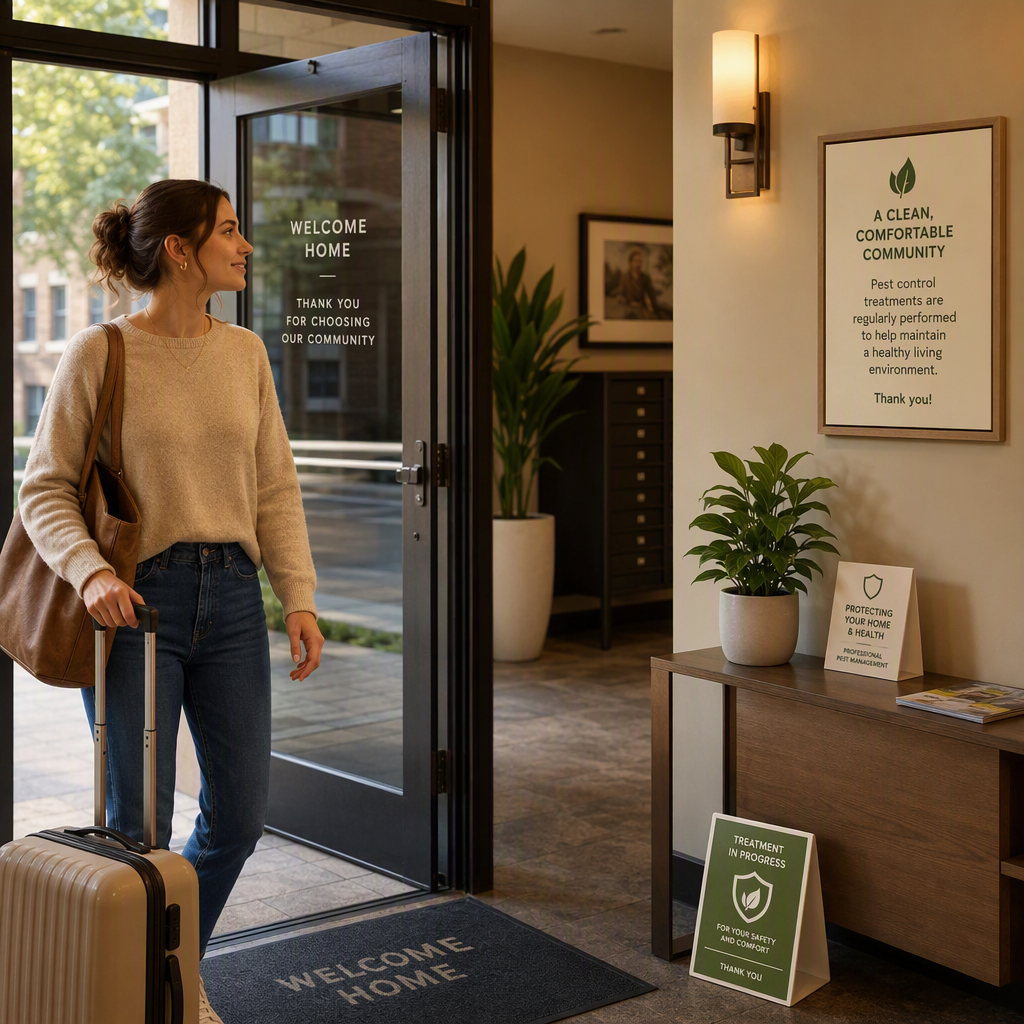
Key Highlights
- Apartment pest control in multifamily residences usually combines inspection, treatment, and follow-up to reduce pest activity and stop pests from spreading between units.
- Good pest management focuses on problem spots like kitchens, bathrooms, cracks, and other entry points where pests hide or move.
- Professional treatments often include sprays, bait packets, and exclusion steps that help remove active pests and limit new access.
- Regular inspections matter because apartment buildings have close proximity, shared walls, and common areas that can increase pest pressures.
- New residents should expect clear service steps, simple prep instructions, and advice on food storage, clutter, and reporting issues fast.
- In many cases, landlords arrange service, while tenants support results through pest prevention habits and quick communication.
Introduction
Moving into apartment buildings can be exciting, but pest control is one detail you should understand early. In shared spaces, one small issue can spread fast from unit to unit. That is why apartment pest control matters for new residents. If you know how service works, what gets treated, and what your role is, you can protect your space with more confidence and peace of mind.
Understanding Apartment Pest Control Services
Pest control services in multifamily residences are built around both removal and prevention. Technicians do not just react to visible bugs or rodents. They also look for the causes behind the problem, which supports stronger pest management over time.
That proactive approach matters in apartments because pests can travel between housing units with easy access. The next sections explain how service usually works building-wide and what new residents can expect during visits.
How Pest Control Works in Multi-Unit Buildings
In apartment buildings, pest control usually starts with an inspection of units and common problem areas. The goal is to find pest activity, spot likely entry points, and understand how pests may be moving through the structure.
Because pest pressures are different in each property, many companies use IPM programs. This means they treat current pests while also working to reduce food, water, shelter, and access. Sealing cracks and checking outside conditions are part of that process.
Property managers often coordinate service with residents. When management and tenants act together, treatments work better and pests are less likely to shift from one unit to another.
What New Residents Can Expect from Professional Treatments
For new residents, professional treatments are usually simple and focused. Pest control professionals check visible signs of pests, look near likely hiding spots, and decide whether treatment, monitoring, or exclusion is needed. This is common during unit turnover or after a complaint.
You may notice a technician working around areas where pests travel or enter. Regular inspections help catch small issues before they become larger pest infestations across nearby units.
- Technicians often inspect baseboards, cracks, crevices, and gaps near cabinets or appliances.
- You may see sprays, bait packets, or notes about sealing access points.
- You may also get simple instructions for cleaning, clutter control, and reporting future pest activity.
Common Apartment Pests Residents Should Know
Apartments can attract many pests because common areas and private units offer food, water, and shelter. In buildings with heavy traffic, pests may enter through doors, vents, pipes, or shared walls.
Knowing the signs of pest activity helps you act early. That matters because pest infestations in one particular location can spread quickly. Here are the frequent invaders many residents should watch for.
Identifying Frequent Invaders: Cockroaches, Ants, and Rodents
Cockroaches, ants, and rodents are some of the most common pests in apartment complexes. They thrive where people live close together and where food crumbs, trash, or moisture are easy to find. A small pest problem can spread faster than many residents expect.
Some pests are drawn to kitchens and trash areas, while others move through wall gaps and utility lines. That is why rodent control and ant control often require more than a quick spray.
- Cockroaches hide in warm, tight spaces near food and water.
- Carpenter ants or an infestation of ants may appear near moisture and crumbs.
- Rodents use openings along walls, pipes, and appliances to enter and travel.
Spotting Bed Bugs, Spiders, and Other Typical Pests
Bed bugs and spiders are also seen in apartments, along with other insects that take advantage of easy access and indoor shelter. These pests do not always come from poor housekeeping. Sometimes they arrive through travel items, nearby units, or used goods.
Bed bugs are a special concern for new residents because they can hide in luggage, fabrics, and secondhand furniture. Spiders may stay in quiet corners, storage spots, or less-used rooms.
- Check secondhand furniture carefully before bringing it inside.
- Keep up proper food storage to make your space less attractive to other pests.
- Report unusual bites, webbing, or recurring sightings early.
Who Is Responsible for Pest Control in Apartments?
Responsibility in a rental property can depend on local rules, lease terms, and the source of the issue. In many cases, the landlord’s part is to help keep the unit habitable and arrange needed service.
Still, tenant behavior matters too. Pest control apartment laws can vary by state and city, so both sides should know their duties. The next sections break down what property owners and renters typically handle.
Landlord Obligations for Pest Management
In many situations, property owners are the ones who arrange pest management in apartments. The main reason is simple: they are usually responsible for maintaining a habitable living space. Serious pest issues can make that impossible.
The exact legal verbiage changes by location, but a number of constants still apply. Landlords often need to keep buildings up to code, handle repairs quickly, and respond when pests affect safe living conditions.
If the problem did not start because of the tenant’s actions, landlords are generally more likely to be responsible for treatment. In shared buildings, building-wide service is often the most practical option.
Tenant Duties for Pest Prevention and Reporting
Even when a landlord arranges service, tenant duties still play a big part. Pest prevention starts with daily habits inside your unit. If your actions create the issue, you may be held responsible in some cases.
Fast reporting is just as important. Waiting too long can let pest activity grow and spread into nearby housing units. Small signs should never be ignored.
- Use best practices like washing dishes, wiping counters, and removing garbage promptly.
- Focus on food storage by using sealed containers and keeping surfaces clean.
- Report leaks, an overflowing trashcan, or new pest sightings right away.
Areas Pest Control Professionals Target in Apartments
Pest control professionals usually target areas where pests hide, feed, or enter. The treatment focus is not random. It follows the places pests use most inside the living area and other parts of the indoor space.
That includes both private rooms and building-level zones. To understand where service happens, look at the high-risk areas inside units first, then the shared spaces beyond your door.
Treatment Focus: Kitchens, Bathrooms, and Entry Points
Inside apartments, pest control professionals often treat kitchens, bathrooms, and entry points first. These spots give pests what they need most: food, moisture, warmth, and hidden travel routes. Treatments may be placed along baseboards, cracks, and crevices.
Technicians also check gaps between walls and cabinets, around appliances, and near doors. In some units, pests move through electrical conduits and similar openings, so those areas matter too.
|
Area |
Why It Gets Attention |
|---|---|
|
Kitchens |
Crumbs, grease, water, and hiding spots near cabinets and stoves |
|
Bathrooms |
Moisture, pipe gaps, and quiet spaces behind fixtures |
|
Entry points |
Doors, cracks, and small openings where pests enter the unit |
|
Appliance gaps |
Tight spaces behind or beside appliances used as shelter |
|
Electrical conduits |
Hidden paths that can connect one space to another |
Shared Spaces and Building-Wide Pest Control Approaches
Apartments need more than unit-by-unit service. Shared spaces can support pest activity too, especially when many people use them every day. If these spots are skipped, pests may keep returning.
Common areas such as hallways, trash zones, storage sections, and laundry rooms can all affect results. Pests use these places for movement, shelter, or food access before spreading into private apartments.
That is why many providers use building-wide IPM programs. When the entire building is considered, treatment and prevention become more effective, especially in properties with repeated tenant complaints or heavy pest pressures.
Preparing Your Apartment for Pest Control
Preparing for pest control does not need to be hard. A few simple actions can help technicians work better and help treatments reach the right spots. That proactive approach can improve results and reduce delays.
For new residents, good preparation also brings peace of mind. When you know what to do before and after service, the visit feels more manageable. Start with the basic steps below.
Steps to Take Before a Scheduled Treatment
Before service, clear the areas that are most likely to be treated. That helps the technician inspect and work around baseboards, cabinets, appliances, and other problem zones. Preparing early also keeps the visit moving smoothly.
The best steps to take are usually simple steps you can finish in a short time. They focus on sanitation and access, not major cleaning projects.
- Practice proper food storage by sealing food and putting dishes away.
- Reduce clutter so pests have fewer hiding places and technicians can reach treatment zones.
- Take out trash, wipe counters, and report leaks or new pest activity before the appointment.
Safety Tips for Pets and Children During and After Service
Many residents worry about safety during pest control visits, especially if they have pets or children. That concern is normal. Some companies use green shield standards and friendly options that aim to reduce impact while still treating the pest problem.
Even so, you should still follow the technician’s directions carefully. Safety depends on the product, the treatment area, and whether post-service instructions are followed.
- Keep pets and children away from treatment areas until the technician says it is okay.
- Ask questions if you have legitimate health concerns before service begins.
- Follow all label and technician guidance for safer use and more peace of mind.
Conclusion
In conclusion, understanding how pest control works in apartments is crucial for new residents. With the right knowledge, you can ensure a pest-free living environment while knowing your responsibilities as a tenant and what to expect from your landlord. By being proactive in pest prevention and collaborating effectively with pest control professionals, you can minimize infestations and maintain a healthy home. Remember, regular pest control treatments can keep common invaders at bay and protect your well-being. If you’re considering pest control options, don’t hesitate to get quotes from various services to find the best fit for your apartment needs.
Frequently Asked Questions
How often should pest control be performed in apartments?
Monthly pest control may be needed for a short time during active pest infestations, but not every apartment needs that schedule. Regular inspections and treatment every two or three months are often enough, depending on pest pressures across the entire building.
Can I hire my own pest control service if the building is treated?
You may be able to hire your own pest control services, but check with property managers first. In a rental property, outside professional treatments can affect building plans, access, and follow-up. This is especially important when tenant complaints involve shared walls or common areas.
Are pest control treatments safe for my pets and children?
Many pest control companies use green shield practices and friendly options, but safety still depends on proper use. Ask questions, follow technician directions, and keep pets and children away from treated areas as instructed for better peace of mind.
