
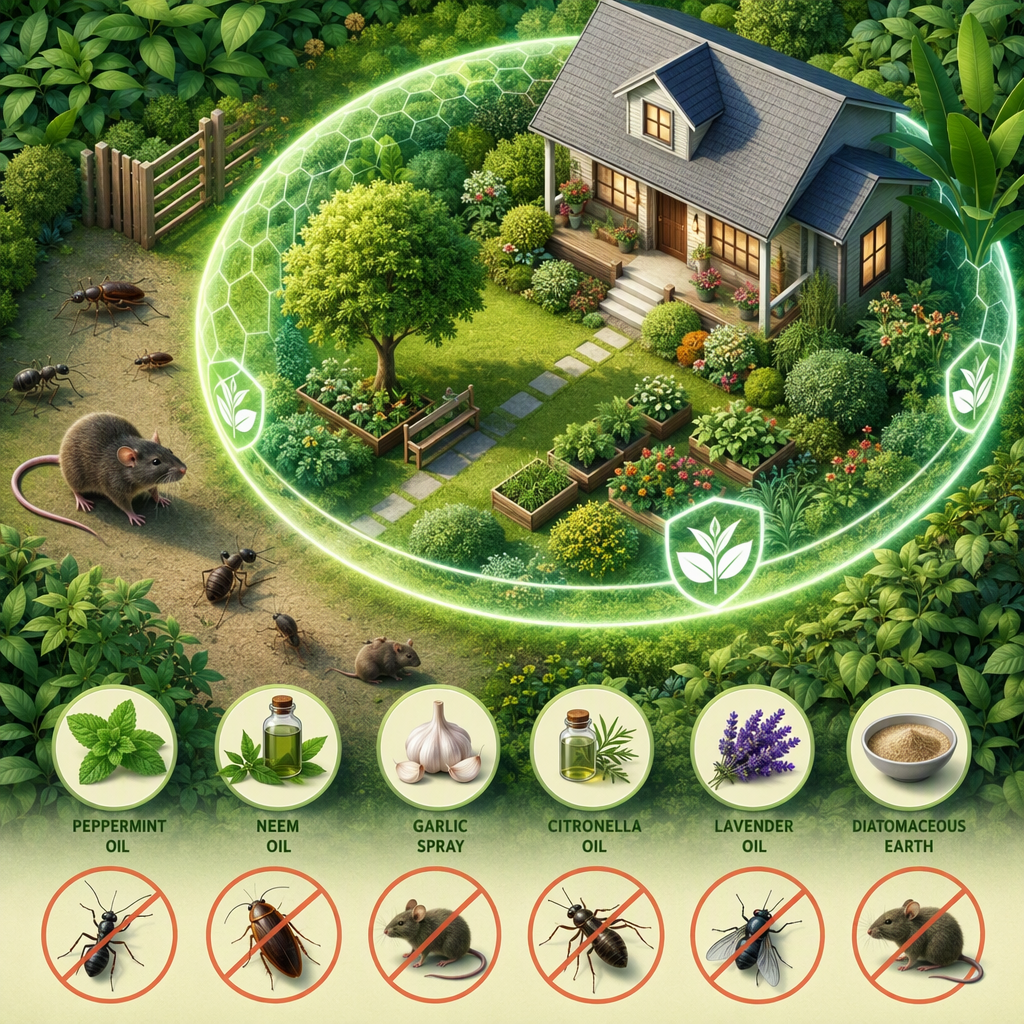
Key Highlights
- Integrated pest control is a pest management system that mixes practical control methods instead of relying on one treatment.
- IPM programs use monitoring, pest identification, prevention, and targeted pest control action.
- The use of pesticides is limited and applied only when needed.
- This approach helps reduce risks to people, property, and the environment.
- It works in farms, homes, gardens, and workplaces.
- Many growers in the United States already use parts of this method.
Introduction
Pest control works best when you do more than react to a problem. That is where pest management through an ipm approach stands out. Instead of depending only on sprays, it uses smart planning, observation, and careful action. If you want a simple way to understand modern pest control, this guide explains the definition, benefits, and basic steps clearly.
Integrated Pest Control Overview
Integrated pest control is a practical pest management system. It combines several pest control and control methods to reduce damage with lower risk. These ipm practices are based on current information about pests and their surroundings.
You will see it used by growers, homeowners, and workplace managers. They adopt it because it can manage pest problems in a more careful and economical way. The next sections break down what that means.
Definition of Integrated Pest Control
In simple terms, integrated pest control means using a mix of pest control methods to handle pests wisely. It is not one treatment or one product. It is a full process.
IPM programs use information about the life cycles of pests and how they interact with the environment. That helps you choose methods that are effective and lower in risk.
A key part is the action threshold. This is the point where pest numbers or environmental conditions show that action is truly needed. So, integrated pest control means acting at the right time, with the right method, for the right reason.
Key Differences Between Integrated and Traditional Pest Control
Traditional pest control methods often focus on fast treatment, sometimes with broad chemical pesticides. Integrated pest control starts earlier. It checks pest populations, studies the cause, and uses several options before stronger action.
That means the use of pesticides is more limited in integrated systems. Targeted treatments may be used, but broad spraying is treated as a last resort.
|
Approach |
Main Focus |
|---|---|
|
Integrated pest control |
Monitor, identify, prevent, then choose the least risky control |
|
Traditional pest control methods |
Respond quickly, often with direct treatment |
|
Use of pesticides |
Targeted and limited in IPM; broader use is more common in older methods |
|
View of pest populations |
Threshold-based in IPM; any sighting may trigger action in traditional systems |
History and Development in the United States
In the United States, the development of IPM programs grew from the need to solve pest problems with less hazard. The approach became important in both agricultural and non-agricultural settings.
Federal guidance explains IPM as a process built on evaluation, decisions, and controls. Over time, growers moved along an IPM continuum, from simple pest checks to wider use of lower-risk methods.
The compiled material does not name a specific pest management board, but it does show broad support through public programs and Extension services. Growers usually adopt these methods because they want practical control with lower risk and better long-term decisions.
Principles of Integrated Pest Control
The main ipm principles are simple. You prevent trouble where possible, monitor conditions, identify the pest correctly, and act only when needed. That creates a more thoughtful pest management plan.
Another core idea is using lower-risk options first, including biological control. When you follow these principles, your response becomes more accurate. The next three parts explain how prevention, monitoring, and combined controls work.
Prevention Strategies
Prevention is the first line of pest management. The goal is to stop pest establishment before it starts. This lowers damage and reduces the need for later treatments.
In farms, prevention often uses cultural practices. These include crop rotation, pest-resistant varieties, and planting clean stock. In homes, it means removing conditions that attract pests.
- Remove sources of food by sealing and storing items well.
- Fix leaks so moisture does not support pests.
- Use cultural practices like crop rotation in growing spaces.
- Keep indoor and outdoor areas clean to reduce pest establishment.
Monitoring and Identification Techniques
Monitoring tells you what is really happening. Instead of guessing, you track pest numbers and watch environmental conditions that may support growth or spread.
Correct pest identification matters just as much. Not all insects, weeds, or living organisms need control. Some are harmless, and some are helpful. If you misidentify the issue, your response may be unnecessary.
This is why threshold levels are used. A single pest does not always mean action is needed. Monitoring and identification help you decide when the problem is large enough to justify treatment.
Combining Biological and Chemical Controls
A strong IPM plan does not treat all controls the same way. It starts with safer choices and builds only when needed. That may include biological control, mechanical steps, or targeted treatments.
Natural enemies and other lower-risk tools can help reduce pest populations without broad exposure. The aim is to manage the issue while lowering harm to people and the environment.
If those steps are not enough, chemical practices may be added. Still, pest control action should stay targeted. Broad, non-specific spraying is held back as a last resort, not the first response.
Steps in the Integrated Pest Control Process
The ipm approach follows a clear process. You assess the problem, choose suitable pest control methods, apply control measures carefully, and then review the results. This keeps treatment tied to real conditions.
That step-by-step method is one reason IPM is dependable. It helps you avoid rushed decisions. To make it practical, let’s look at assessment, implementation, and evaluation one by one.
Assessment and Planning
The first step is assessment. You look at the pest problems, the location, and the likely impact. Good planning starts with facts, not assumptions.
Next, you consider whether the issue creates health risks, property damage, or an economic threat. This matters because not every pest sighting calls for treatment. Some situations can be watched instead of treated right away.
That is where the action threshold is used. You decide the point at which control becomes necessary. Planning around that level helps you choose a response that fits the real problem and avoids needless intervention.
Implementation of Control Methods
Implementation means putting the chosen control methods into action. You begin with options that are effective and lower in risk. That keeps pest control focused and practical.
For example, a grower may use mechanical control such as trapping or weeding. In other cases, biological control agents or pheromones may be used to disrupt pest activity before stronger steps are needed.
If those actions do not work well enough, more direct treatment may follow. The key is that implementation happens in stages. You do not jump straight to the broadest method when a targeted option may solve the problem.
Evaluation and Continuous Improvement
Evaluation checks whether the plan worked. After treatment, you review pest numbers, look at conditions, and decide if the selected step reduced the issue enough.
This review supports continuous improvement. If one method was weak, your future management strategies can change. If a lower-risk option worked, it may stay part of your standard response.
Over time, strong ipm practices are built through this cycle. You monitor, act, review, and adjust. That is why IPM is often described as a process instead of a one-time service or a single product choice.
Applications and Example Scenarios
IPM works in more than one setting. These ipm practices can be used in homes, farms, gardens, and workplaces because the pest management process is flexible and based on local conditions.
What changes is the type of pest control methods you choose. The next examples show how the same system can handle indoor issues, crop protection, and different pest groups in a practical way.
Residential Integrated Pest Management
In a home, pest management starts with simple prevention. You store food in sealed containers, clean up crumbs, and reduce clutter that gives pests shelter. These steps cut down common pest problems.
Moisture is another big factor. When you fix leaks, improve sanitation, and remove easy access to food and water, you make the space less inviting. That can lower activity before treatment is even needed.
If pests still appear, pest control methods can be added in stages. You might monitor the area, identify the pest, and then choose a targeted response. This is the kind of thinking used by GuardUp Pest and an Affordable Pest Control Service in Santa Clarita.
Agricultural Integrated Pest Management
On farms, pest management often begins with field planning. Growers use ipm practices such as crop rotation, resistant plant varieties, and close observation of pest activity across the season.
Weed management also fits into this system. Farmers may remove weeds mechanically, adjust planting choices, or use targeted tools that reduce larger outbreaks. The idea is to prevent major damage before it spreads.
This differs from organic farming, though they share some ideas. IPM can include carefully selected pesticides when needed, while organic systems limit products to natural sources. Both aim to protect crops, but IPM offers a wider range of options.
Types of Pests Managed by Integrated Methods
Integrated methods can manage many pest species. The system is not limited to one kind of issue. It works wherever prevention, observation, and targeted response are possible.
That includes insect pests, diseases, weeds, and other damaging organisms. The exact method depends on the setting, the level of harm, and the available lower-risk tools.
- Insect pests affecting crops, gardens, or indoor spaces
- Plant pathogens that threaten growth and yield
- Animal pests in homes, lawns, or work areas
- Invasive species that spread and cause wider damage
Conclusion
In summary, integrated pest control is a comprehensive approach that prioritizes sustainable practices while effectively managing pest populations. By combining prevention strategies, monitoring techniques, and various control methods, it ensures a balanced ecosystem within both residential and agricultural settings. This holistic framework not only minimizes the reliance on chemical solutions but also enhances the overall health of the environment. Understanding and implementing integrated pest control can lead to long-term benefits, ultimately creating safer spaces for families and communities. For those seeking to improve their pest management strategies, consider exploring integrated methods to foster a healthier living atmosphere.
Frequently Asked Questions
Are there disadvantages or challenges with integrated pest control?
Yes. Pest management through IPM takes planning, regular checks, and correct identification. Some ipm practices can take more time than simple spraying. Still, the process helps reduce health risks and environmental risks by choosing pest control methods more carefully.
How effective is integrated pest control compared to chemical-only methods?
Integrated pest control can be very effective because it matches action to real pest populations. Instead of relying only on chemical pesticides, it uses effective control methods in stages. That often improves precision and reduces unnecessary use of pesticides over time.
Why is integrated pest control considered environmentally friendly?
It is considered environmentally friendly because pest control action is based on monitoring, threshold decisions, and actual pest populations. This lowers unnecessary use of pesticides, helps protect water quality, and supports responses that fit environmental conditions instead of broad, routine treatment.
